

Quick Start
- Set your church Portal URL (short name) under Settings → Portal — required for public links.
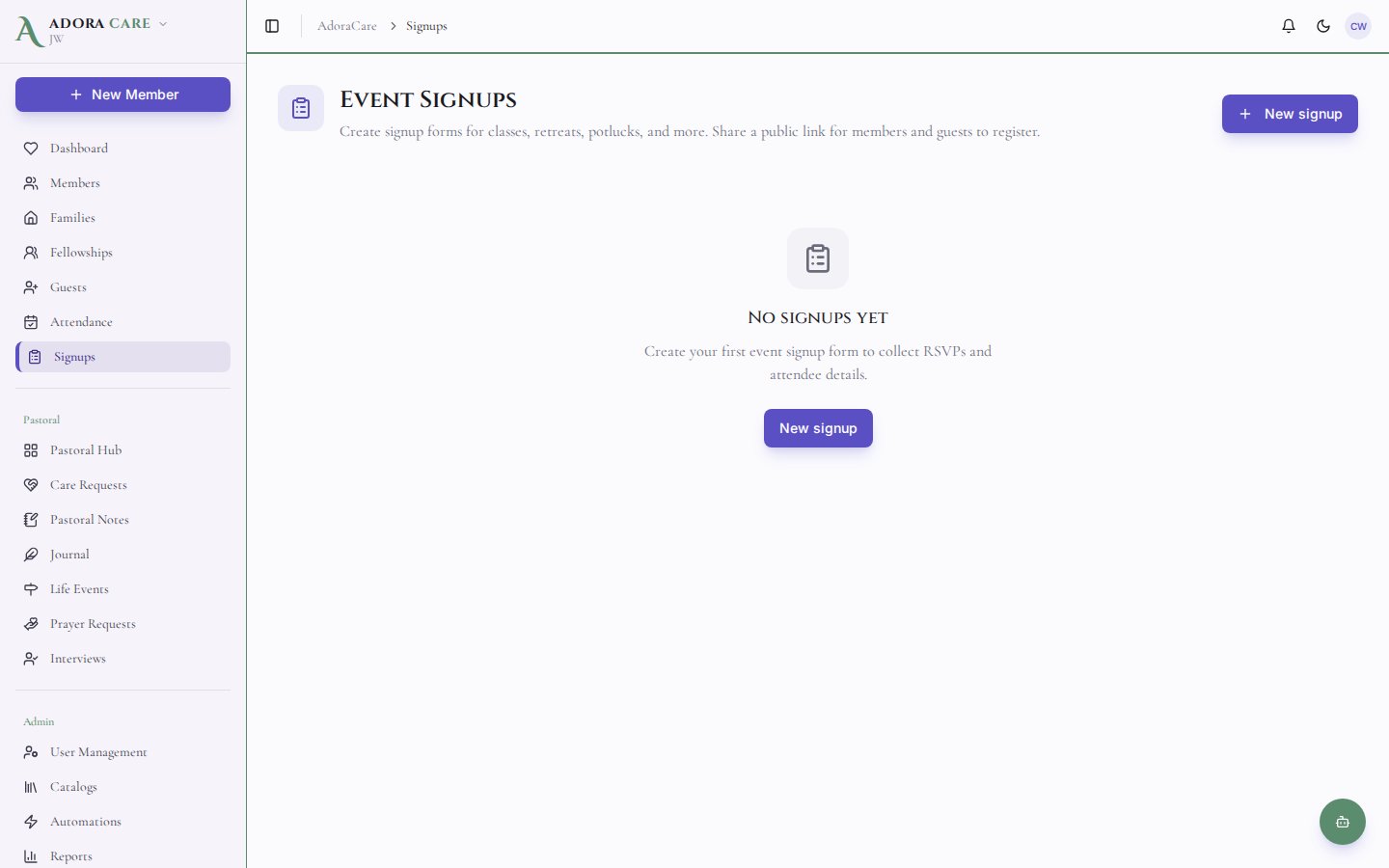
- Open AdoraCare → Event Signups.
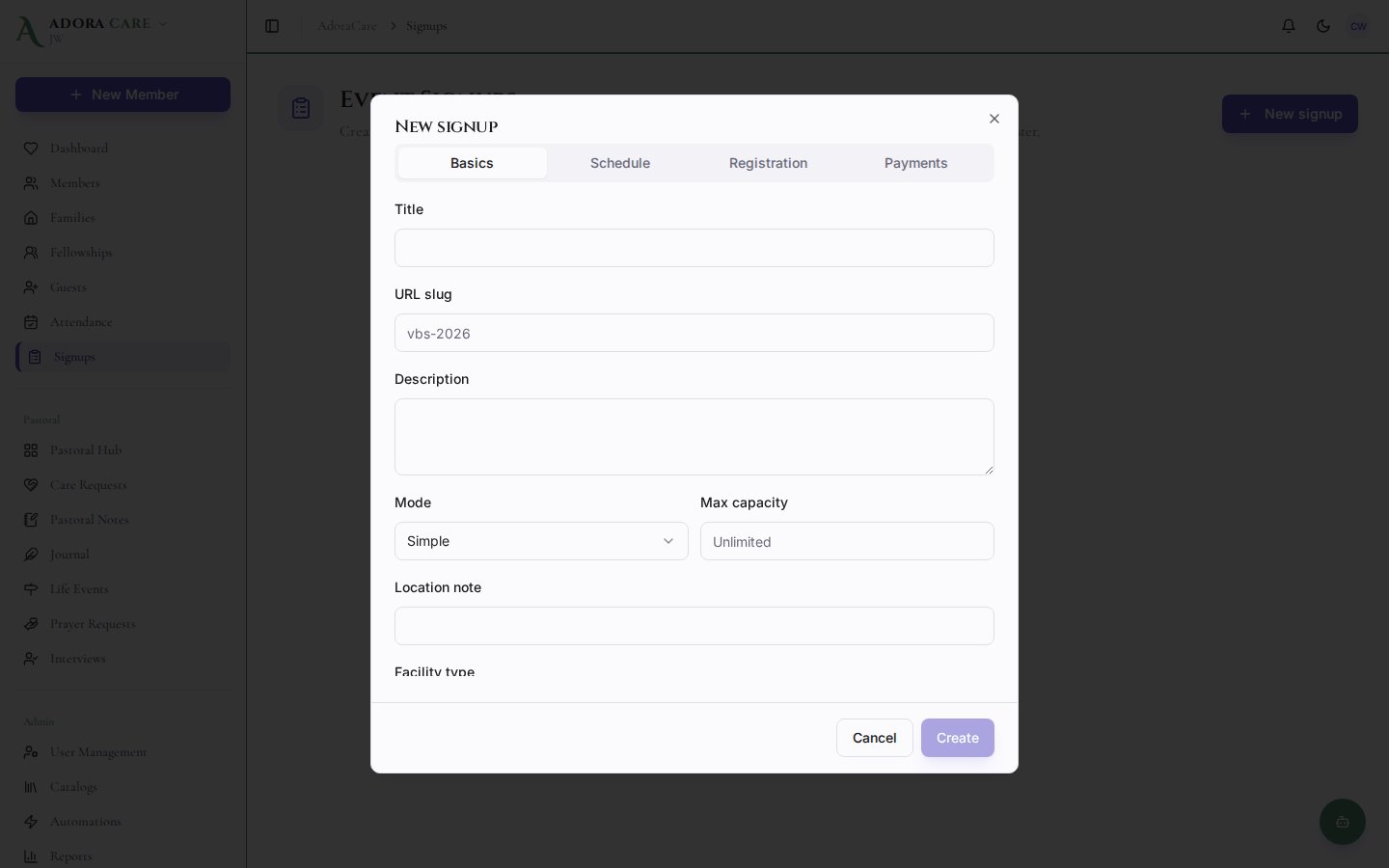
- Click New signup and complete the Basics, Schedule, Registration, and Payments tabs.
- Publish the event and copy the public link.
- Review registrations on the event detail page; promote waitlisted guests or record payments.
How-to Guide
Event Signups vs. Portal Events
| Feature | Event Signups (this guide) | Portal — Events |
|---|---|---|
| Who uses it | Staff create forms; anyone with the link registers | Logged-in portal members |
| Best for | VBS, camps, retreats, paid events, custom questions | Simple “I’m attending Sunday service” RSVP |
| URL | /{church-short-name}/signup/{event-slug} | /portal/events (after portal login) |
| Payments | Manual ledger, deposits, discount codes | Not supported |
| Waitlist | Yes, with promotion | No |
Create a signup event
New signup
Click New signup. Choose Simple (headcount) or Detailed (per-attendee types, sessions, custom questions).
Schedule
Pick the event date. The mini calendar shows other signups so you avoid double-booking rooms mentally.
Registration
Configure capacity, waitlist, anonymous signups, email verification (OTP), and household registration (detailed mode).
Payments
Set currency, default amount, deposit rules, external payment link, scholarship requests, and discount codes (detailed events).
Share the public link
Public URL pattern:Manage registrations
Open an event from the list to manage:| Tab | Purpose |
|---|---|
| Registrants | Filter by confirmed, waitlisted, cancelled, or pending verification; promote waitlist; cancel rows |
| Payments | Record manual payments, export/import CSV, see balance due |
| Selection types | (Detailed) Pricing tiers and per-type questions |
| Sessions | (Detailed) Time blocks with per-session capacity |
| Discount codes | Promo codes that adjust totals |
Simple vs. detailed mode
| Mode | When to use |
|---|---|
| Simple | Potlucks, headcount RSVPs, events with one price for everyone |
| Detailed | VBS with age tracks, camps with session pickers, events needing per-child forms |
Payments and reminders
Event Signups uses a manual payment ledger in v1 — record cash, check, or external processor payments on the Payments tab. Registrants can see balance due on the confirmation screen when an external payment link is configured. A daily cron sends balance reminders for registrations with outstanding balances (when enabled in your environment).Related
Portal — Events
One-tap RSVP for portal members on attendance events.
Portal — Security
Portal URL short name and feature toggles.
Guest Pipeline
Follow up with first-time guests after events.
Roster
Volunteer scheduling (separate from event registration).